Monday, 21 April 2014

Remaking Movies-Total Recall

Remaking Movies
Total Recall


Total Recall tells the story of Douglas Quaid/Hauser a man who's really not enjoying the route is life is going in and discovers a place called Rekall, a place where you can have false memories, live the life you want. He goes to Rekall to find himself already in false memories and see's his real life a secret agent in a war he doesn't know which side he is on.

The original Total Recall was realised in 1990, starring Arnold Schwarzenegger as Douglas Quaid/Hauser. In this Douglas' memories take him to Mars as a secret agent. In 2012 the remake of Total Recall see's Colin Farrell taking the role of Douglas Quaid/Hauser although  in this his memories don't take him to Mars they instead keep him on Earth. Many people including myself thought casting Farrell to take a role once done by Scharzenegger was a bad idea, Scharzenegger done a great job of the 1990 original another wasn't necessary, proving us wrong, on it's US opening weekend Total Recall 2012 had a grossing of  $25,577,758 after working with a budget of $125 million. The 1990 Total Recall had a grossing of $25,533,700 on it's opening weekend after working with a budget of $65 Million.


Total Recall 1990 was directed by Paul Verhoeven previous to Total Recall another successful film directed by Verhoeven is Robocop, after Total Recall he then went on to direct Basic Instict & Starship Troopers plus others but these were the most successful. Total Recall 2012 was directed by Len Wiseman who also directed the Underworld Saga and Live Free or Die Hard but is yet to direct since Total Recall. You can see in both of the Total Recalls more the original that both directors put their own flavour into them.Verhoeven's trio of Robocop, Total Recall and Starship Troopers are all based in the future and use a similar styling. Another common thing with Verhoeven is Total Recall and Starship Troopers are both based on other planets. Where with Wiseman Underworld isn't based in the future but Total Recall is, you can still see his frames of work within the both films.


An iconic scene from the original see's Quaid meeting a three-breasted lady, this became one of the most remembered and loved scenes from the film which just meant Wiseman couldn't leave her out giving the three-breasted lady her moment in the film.

Although Wiseman's Total Recall is a remake of Verhoeven's being that the casting is totally different to the original and it being based on Earth not Mars, you get two "totally" different feels from the each of the films. Verhoeven's gives the full on Sci-Fi action feel where Wiseman's gives a full on action feel with futuristic settings.

In Total Recall Quaid's wife as portrayed by Sharon Stone in the original and Kate Beckinsale in the remake have also both been a part of both directors other successful films, Stone in Basic Instict and Beckinsale in Underworld. Both directors used their films main characters actors who were at the top of their game at the time of their respective films, taking the role of the Resistance Leader in the original is Marshall Bell who was fresh off Twins another film starring Scharzenegger in the remake the role was given to Bill Nighy who had previously starred in Underworld and was fresh off Wrath of the Titans. The role of Vilos Cohaagen the Colony Leader was given to Ronny Cox in the original who was fresh off Loose Cannons and Captain America, in the remake the role was given to Bryan Cranston who was in his final run of his most known role in Breaking Bad. Finally the role of Melina the love interest of our protagonist was given to Rachel Ticotin in the original who was just starting her filming career with only three previous films done, in the remake we see Jessica Biel as Melina who had just finished with New Year's Eve.

To conclude both films are differently the same, following the same story but expressing them in different ways, both films were strongly cast and all of the cast in both films gave of great characteristics of the same characters. Watching both films and knowing the directors other films you see that the same story can be told in different ways and still give off the same emotions at the end of the film.


Friday, 14 March 2014

Auteur Theory (Wes Anderson)

Auteur Theory
What is Auteur Theory?
Auteur Theory is when a director uses the same style throughout all of their productions such as; Camera Angles (Over The Shoulder, Birds Eye, Close up etc.) Film Features (Slow motion, bouncy etc.) Actors.

A lot of directors could be considered Auteur's, the one I'm going to be writing about is the unique Wes Anderson.

Wes Anderson an Auteur?
                                                      
Wes Anderson is a Texan Director, he is 44, born May 1st 1969, Houston, Texas. He is most known for his unique style with films, Anderson's film career began in 1992 with the short film "Bottle Rocket" he co-wrote it with Hollywood actor Owen Wilson. Bottle Rocket then went on to become a feature film in 1996 beginning Anderson's professional film career. From then to now Anderson's filmography goes: Bottle Rocket (1996), Rushmore (1998), The Royal Tenenbaums (2001), The Life Aquatic with Steve Zissou (2004), The Squid and The Whale (2005), The Darjeeling limited (2007), Fantastic Mr Fox (2009), Moonrise Kingdom (2012), The Grand Budapest Hotel (2014).

The two films I'm going to be using to find comparisons for Auteur are The Royal Tenenbaums and Rushmore.
The Royal Tenenbaums Trailer


Rushmore Trailer


Camera Angles/Shots
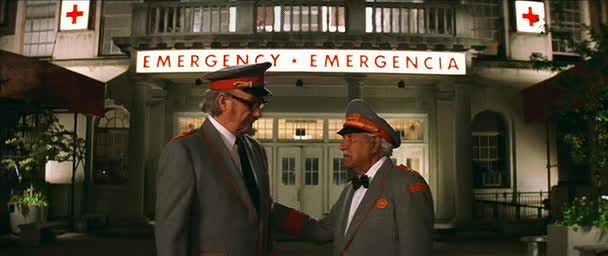
An occurring camera shot used throughout The Royal Tenenbaums is a two shot close-up/mid shot here are some examples of these:
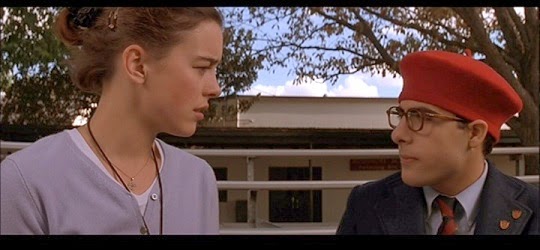
Rushmore two shot close-up/midshots:
These are just some examples of shots that Anderson uses in his films another is birds-eye view. In The Royal Tenenbaums he uses the angle on the very first scene, on Rushmore he uses the angle in a scene where Bill Murray's character 'Herman Blume' is diving into his swimming pool at his Son's party.

Another shot style that Anderson likes to use in his films is slow motion. In The Royal Tennenbaums we see slow motion when the family is reunited and Margot and Richie see each other:
In Rushmore we see slow motion when Max and Herman are sabotaging each others lives:
http://www.youtube.com/watch?v=zh04EaZQs0U
(The video I found on youtube isn't on the blogger search)

Another visual style Anderson uses throughout his films is the mise-en-scene colour palette as the two shot images show above he uses colours like; Red, Yellow & Grey in costume and dusk colours in the background/setting.

Something repetitive you see in most of Anderson's films are the actors used the 3 main actors in a lot of his films are:
Bill Murray


Owen Wilson


Jason Schwartzman


Not only is Owen Wilson a recurring actor in Anderson's films but his old time friend also co-wrote Anderson's first three films.

This is the point where a lot of people would argue that yes these are some similarities in Anderson's films but each of Anderson's films are different so does that really make him an auteur?

I'd say yes Wes Anderson is an auteur although every one of his films are different they all have similarities I only used 2 examples in this but in every one of his films you will see the same things: Mise-En-Scene Colour Palette, two shot close ups & mid shots, slow motion and actors. Just to show this here's another example Moonrise Kingdom:
Actor, Jason Schwartzman


Bill Murray


 Also in the above images you see the colour palette, with the bright yellow scarf and dusk yellow tents in the background of Schwartzman's scene and the yellow and scarf and red raincoat on the character in Bill Murrays plus the dusk background and two shot mid shot. Finally a slow motion scene from Moonrise Kingdom:
@0.40


To finalize I do feel that Wes Anderson is an auteur everything about his films show that he is.


Wes Anderson Information
Rushmore Trailer
Royal Tenenbaums Trailer
Royal Tenenbaums two shot close-up image
Royal Tenenbaums two shot mid shot image #1
Royal Tenenbaums two shot mid shot image #2
Rushmore two shot mid shot image #1
Rushmore two shot mid shot image #2
Rushmore two shot close-up image #2
Royal Tenenbaum Slow Motion
 Bill Murray Image
Owen Wilson Image
Jason Schwartzman Image
 Jason Schwartzan Moonrise Kingdom Image
Bill Murray Moonrise Kingdom Image
Moonrise Kingdom Slow motion

Tuesday, 25 February 2014

Archie's Final Project Review

Archie's Final Project was a unique film although I never enjoyed it it had its positive aspects. The film was about the life of Archie Williams and his journey to suicide. We first see Archie it small segments talking about commiting suicide. After he announces his film at school, it gets other people involved the girl he dreams about Sierra Silver joins him in the journey. After it goes to far and another student ends up killing themself it makes Archie think twice about it.

For me the film didn't have a sole purpose of entertainment but is made more to show Suicide awareness, in that I like the idea of the film, but watching it from an entertainment point of view I found the film to have lack of entertainment. It was quite a grim film I don't think I'm going to watch it again and I wouldn't recommend it to anyone unless for a Suicide Awareness programme.

Sunday, 26 January 2014

Principles of Editing

Editing is used for different reasons, in Film & TV it I used to tell a story and to create a mood or atmosphere.

Concepts of editing
Editing is used in a Film to either introduce new information into the story or motivation for the characters.

Introducing New Information
A new shot should always give new information. In a motion picture, the new information would usually be a new character or a different location.
The shot you are cutting to should give more information, as well as the shot you are cutting from. For example a man could be looking at something in horror then the shot cuts to a murderer.

History of Editing
In 1895 the Lumiere Brothers invented a film recorder it was called, Cinematographe. Cinematographe was a 3 in 1 machine which recorded, captured and projected motion pictures.
The Lumiere Brothers lead the way for more ways of filming and editing.
In-Camera Editing
In-Camera Editing was used in the early years of filming. In-Camera Editing means the camera operator filmed in the linear order which the production will be viewed. It was used as the main filming edit before splicing became easier to do. One of the biggest in-camera editors was George Melies.
The problems with in-camera editing is it takes a lot of planning for the shots to work in order. There's no cutting the edit after it has been filmed, once the last scene is filmed the production is done.
Analogue Editing
Analogue Editing came after In-Camera, Analogue is the first step to cut editing. It was done using a razor blade and splicing block.

The tape would be cut with the razor blade then taped back together in the order intended, the cut and tape would be repeated until the film was created. An example of analogue editing could be the first film ever "exiting the factory" 

Following The Action
Following the action is a series of shots on one character. The shots are taken from a different camera, when a character is walking each time they turn a corner or change destination.

Following the action can also just simply be a single camera rotating round a specific character or event, this gives a less boring effect to the shot instead of it just showing the character or event from one angle.

Multiple Points of View
Using Multiple points of view, is exactly as it says, when a series of shots are used showing an event from many different point of views.

It can also mean when a film uses a good guy/ bad guy story we see both point of views from good and bad throughout the film. An example of a single event being seen from a variety of point of views is "Vantage Point" when a US President is assassinated we see the event from many different characters point of views.

Shot Variation
Shot Variation is a series of shots from different angles. Most commonly a wide shot would be used first to introduce the scene, this would turn into a long shot of a character or characters, this would usually show the main character/s. Next there are different shots that can be used, first a mid shot showing a character speaking or a two or three shot showing different characters talking.
Shot variation doesn't always have to be characters speaking, it can be used to show an event and have the different angles show the event in a much more interesting way making it less boring for the audience.
Manipulation of Diegetic Time and Space
The use of Manipulation of Time and Space shows a series of time in a single moment, this can be a character ageing as a Camera angle changes. It doesn't always have to be a character seen it can be an object, for example a flower could be seen alive then withers in a second.
It doesn't always have to show something ageing, a character having a flashback also shows manipulation of time and space this is because it isn't set in the current time.
Conventions and Techniques
Seamless Editing- Seamless editing is two shots edited together so cleanly that there is no jump in the cuts.
Continuity Editing- An edit that is used to keep a clear narrative. There are many rules to continuity editing, they are:
  • Establishing Shot- A long shot that usually shows a setting which introduces where the next scene will be.
  • Shot/Reverse Shot- Two shots usually used in a conversation scene, one shot shows the speaking character over the shoulder of the listening character, the other shot shows the listening character responding over the shoulder of the new listening character. Sometimes a shot can show a character listening and the speaking character is the over the shoulder shot. The two shots are edited together alternating from shot to shot giving the conversation seen more interest and makes it clear.
  • 180° Rule- The angle between two consecutive shots shouldn't go more than 180° to keep the spatial relationship between characters and objects.
  • 30° Rule - The angle between two shots shouldn't be more than 30° to keep the shot clear and not confusing for the viewer.
  • Parallel Editing (Crosscutting)- An edit that alternates between two shots happening at the same time in different locations.
  • Match on Action- An edit which shows two scenarios occuring at the same time side by side on screen.
  • Eyeline Match- A cut between two shots, the first shows a person looking in a certain direction, the second shot shows either the object they are looking at or a person looking back at them in the exact opposite direction.
  • Re-Establishing Shot- A long shot which once again shows the setting of a scene, this usually closes the scene for that setting.


Thursday, 16 January 2014

Critical Approaches (Torchwood & Dr Who)

Genre- TV Sci-Fi Drama
Doctor Who v Torchwood
The Spin-Off

TV Sci-Fi Drama
Sci-Fi
Science Fiction or Sci-Fi is a unique genre. Although it is similar to Fantasy, Sci-Fi is used to portray scientifically possible stories or scientifically postulated physical laws. Fully imaginative things are used but not as much as Fantasy. Sci-Fi is used a lot more as a sub genre, other genres it goes with mostly are: Action, Adventure, Family & Drama. A lot of writers use Sci-Fi to discuss philosophical ideas such as identity, desire, morality and social structure. Sci-Fi is best watched by people who suspend in disbelief.

Codes & Conventions of Sci-Fi
Sci-Fi has very specific codes & conventions what make it what it is, they are futuristic settings, futuristic science & technology, space travel, time travel, parallel universes and extra-terrestrial life. These are specific to the genre because science is always advancing and some of the futuristic settings or technology is scientifically possible. Extra-terrestrial life has never been scientifically proven but with rumours and stories about extra-terrestrial life, imagination is used to create aliens and monsters, most with humanoid features.

Drama
Drama is the most seen and/or used genre this is because it is based on developing realistic characters dealing with emotional themes. Dramatic themes used such as; Alcoholism, drug addiction, sexuality, poverty, class divisions and corruption put the characters into a conflict with themselves. Some sub genres of drama are Romance, Crime, Historical, Documentary, Comedy and Tragedy.

Codes & Conventions of Drama
Drama has many codes & conventions, close up of characters are used to show emotion, Low and High angles are used to show strength and weakness in characters, Alcohol, Drugs, Guns, Knives & Mobile Phones are typically used in dramas. Dramas are mostly set in towns or villages and don't change location unless there's a special episode.

Spin-Off
A spin off is a show based in more detail on a specific topic, event or character of an already made production. In this case Torchwood is based on the character Captain Jack Harkness one of The Doctors companions from the series Doctor who.

Character Representation
Doctor Who has been on for 50 years, throughout the 50 years there has been 11 doctors, each Doctor has there own personality. I'm going to talk about the 10th Doctor as this was The Doctor during Torchwood.

At the start of Doctor Who we are introduced to The Doctor at a slow pace due to regeneration. At the very start The Doctor is learning who he is himself, in the first episode The Doctor loses his hand, this is also used in Torchwood giving a link between the two shows. As Doctor Who goes on we learn more about The Doctor and his past. The Doctor never travels alone, we first see him traveling with Rose Tyler she's first seen as an everyday teen brit, working, trying to make a living, this is when she was very first introduced with the 9th Doctor, when we first see her with the 10th Doctor she get's worried because it's her first time experiencing seeing the regeneration and isn't sure if it's the same man. As time goes on The Doctor and Rose grow a great bond, when The Doctor loses Rose it hits him hard. This shows that for a man who's lived for over 900 years, the right people can still find  away to your heart. Captain Jack is introduced in Doctor Who when the TARDIS lands in Cardiff.


During the time The Doctor has been on his Journey with Rose, Captain Jack has been busy with Torchwood in Cardiff so when he hears the TARDIS he goes running for it. He knows about this because we were first introduced to Captain Jack with the 9th Doctor, with the 9th Doctor a lot of things happened with Jacks life, one of those things being that he was made immortal, this is a big factor throughout Torchwood.
When Jack makes his infamous return to Doctor Who he is introduced to The Doctors new companion, Martha Jones she was introduced to the show as a victim that The Doctor helped, she was introduced as a medical student in a hospital, they meet when the hospital is teleported to the moon and The Doctor goes to help. They travel together for a long time, The Doctor, Martha & Jack all find themselves in a war against The Doctors oldest enemy, The Master. The Master captures The Doctor & Jack leaving Martha alone to save the world this is when we see her full potential, she saves them then leaves The Doctor because of the feelings that she has for him and knowing he doesn't have the same feelings for her. After Rose's departure we are introduced to a new character, Donna Noble. She is seen in the TARDIS in a wedding dress, she is seen as a cocky character similar to the attitude of the actor portraying her, Catherine Tate. She travels with The Doctor for a short time before leaving, then he travels with Martha, after Martha's departure the Doctor is on an alien search alone when he runs into Donna again it becomes a much bigger bond this time and they travel for a long time.


Torchwood is based around 5 main characters who all work for Torchwood.
  • Captain Jack Harkness, Jack is a Time Agent from the 51st century, he is first introduced in Torchwood as the clear leader of Torchwood. At first Jack is very strict about most things but after Gwen joins the group bringing in some sanity to the group he becomes a lot more mellow and laid back. He becomes a lot closer with the team as it progress's. At the start we learn that the team doesn't know of his immortality, only Gwen finds out because she witnessed him die then resurrect. Jack's immortality becomes a big factor during the show as he dies many times to save his team showing how honourable he is.

  • Gwen Cooper, Gwen is introduced as a Police Officer doing her everyday job when she gets sent to a murder case where she has her first encounter with Torchwood, she get's very nosey about Torchwood when she eventually gets involved with it and becomes a part of the team.

  • Ianto Jones, (Yan-to) Ianto is the receptionist for Torchwood, he is first seen as the Chauffeur for the team, he stays like this for a while until things get a lot more dangerous and serious then he becomes more of an agent as well. It is not known at first but it can be seen with hints that Ianto is gay and has feelings for Jack.

  • Owen Harper, Owen is first seen as the gadget guy for Torchwood, it is evident from the start that he is a ladies man. At one point Owen is killed, he is resurrected and becomes known as the "King Of The Weevils" the weevils are a species seen occurring throughout the show. He starts to grow feelings towards Tosh losing his rep as a ladies man. Although he was resurrected he can still be killed and is not immortal like Jack.

  • Toshiko Sato, Tosh is first seen as the tech person for Torchwood, she is first seen very shy and quiet, as it progress's she becomes a lot more known and a much more important member of the group as she becomes a very big help on the battlefield.


Narrative Structure

At the very start of Doctor Who we see that things are not going well from the get go as when we first see The Doctor he comes out of the TARDIS after it crashed, he seems happy at first but then passes out, this is due to a fresh regeneration, after the regeneration is done we learn that the new Doctor is a brave new man. Doctor Who likes to change the set out of episodes, some episodes are linear and others are non-linear. As each of his companions change we learn something more about The Doctor and who he is. The Doctor goes through a second regeneration but doesn't change, after this regeneration we get the biggest reunion of The Doctors companions, they get called "Children Of Time" in this Episode the Earth is stolen all of the companions and the Doctor fly the TARDIS pulling the Earth back to the Solar System.

The narrative of Torchwood is the same as Doctor Who, some episodes are linear and others are non-linear. In the very first episode of Torchwood we see the Torchwood group on the hunt for a murderer, they use an alien tech glove that revives people for a couple of minutes, Gwen the officer is on the case of the murderer and witnesses Torchwood using the glove, the mystery of what happens gets her curious so she gets very nosey with Torchwood, she begins to realise that one of the members is the murderer, they confront each other and Jack is watching it, she knows he is there and shoots him, as she is about to shoot Gwen Jack stands back up so she kills herself, this opens up a spot in Torchwood, Jack offers Gwen the job, she takes at and from there they begin the journey and quest of finding aliens and monsters in Cardiff.






Wednesday, 15 January 2014

Annie Production

Production-Annie

Set Construction
We had no control over how the set was going to be made. We went to a rehearsal to see the set and how it was made, it was a very basic stage production which made it much easier to film.

Rehearsal
We had the opportunity to go to a rehearsal, at the rehearsal we decided on how the cameras would be set out depending on how actors approached the stage and where they stood on the stage. At the rehearsal we done a recee of the location to see where the best place for cameras would be.

Review of Production/Role
In filming Annie I was filming from the high centre cam, my job was to shoot long and mid shots I felt I done this poorly as a lot of the time I was aiming for close ups which would ruin the shot when I tried to zoom out. I've now learnt to go for the shots I've been told to get instead of going for close ups, as they're other cameras which will get the close ups.

Wednesday, 18 December 2013

Pre-Production Annie


Pre-Production Diary

I will be filming the musical Annie, there a something's that are important to think about before filming, making a production folder helped us organise the individual requirements, the first thing we done was a risk assessment and recee list this is so we know where the best places for cameras will be and the dangers of the area we will be working in. After learning the location the next thing to do is to make the camera plan.

After finishing all of the preparation the next thing to do is go to a rehearsal and see how the production will be set out in terms of entrance, positioning on stage and lengths of each act. After seeing the rehearsal the next thing to do is check the camera plan and
make sure the cameras are in a suitable place if not change them to work with the show.

We all will be taking the role of Camera Operator through out the production, equipment that will be needed is:
4x Cameras
8x Tapes
4xTripods
4x Large Batteries
4x Small Batteries
4x Camera Plates
4x Headphones

We will place the cameras stage left & right, lower centre and high centre. The stage left & right cameras will shoot close-up and mid shots, the lower centre camera will shoot mid shots and long shot, the high centre camera will shoot long shots. We have no control over the sound or lighting, these are set by the production to suit their needs.